
Between Moments in Film
2026
cine-mena.com

The MENA Film Platform

Between
Moments
in Film

A living platform for cinema, culture, and professional trajectories across the Middle East and North Africa.

Festivals Labs Funds Markets Filmmakers Archives Distribution Platforms Festivals Labs Funds Markets Filmmakers Archives Distribution Platforms
What CinéMena Is
"A professional framework that operates in the time between production, festivals, and long-term circulation. It does not replace the ecosystem — it makes its role legible."

Nour Labib — Founder & Director, Dubai UAE

The Ecosystem We Know

Every layer of the
industry, mapped

120+
Festivals
Across the region
40+
Labs
Development programs
60+
Funds
Active opportunities
25+
Markets
Industry markets
500+
Filmmakers
In the directory
30+
Platforms
Distribution channels

What Happens in Practice

Continuity is assumed —
but rarely supported.

For Professionals

01Misaligned applications — applying to the wrong opportunities at the wrong time
02Repeated participation without visible progression or trajectory
03Weak long-term positioning between projects

For Institutions

01Limited visibility into what happens to participants after programs end
02Difficulty assessing the long-term impact of their programs
03Repeated structural misunderstandings with applicants

Original Writing

The
Journal

Critical writing on cinema, culture, and the film industry across the Middle East and North Africa. All articles by Nour Labib — researcher, festival practitioner, and founder of CinéMena.

Film projector
Festival Diaries
After the Red Carpet: What Happens to MENA Films Once the Festival Is Over?
June 2026
8 min read
+

There is a moment that every filmmaker knows but rarely talks about. The festival ends. The Q&A is over. The audience has left. You take your film off the screen, pack it back into a hard drive, and fly home. And then — nothing. Or rather, something far more difficult than nothing: the slow, grinding work of figuring out what comes next.

For MENA filmmakers, this moment arrives with particular weight. The international festival circuit — Cannes, Berlin, Venice, Toronto — has become the primary infrastructure through which regional cinema reaches global audiences. Festivals are where reputations are made, where sales agents are met, where a film becomes visible. But visibility is not the same as circulation. And the gap between the two is where careers, and films, get lost.

I have been thinking about this gap for several years — first as a researcher examining how festivals function as industry nodes, and more recently as someone working directly with filmmakers navigating these transitions. The pattern I have observed is consistent enough to constitute a structural problem rather than a series of individual misfortunes.

A film premieres at a major festival. It generates reviews, attention, perhaps an award. A sales agent picks it up. And then — unless the film happens to fit the very specific acquisition logic of a streaming platform or a specialised distributor — it disappears. Not because it is bad. Because the infrastructure for keeping it visible simply does not exist.

The MENA region compounds this problem in specific ways. Films from the region are often positioned as culturally exotic within international festival circuits — valued for their difference, but rarely integrated into the broader systems that sustain a film's long-term life. Distribution deals, when they happen, tend to be limited. Streaming platforms have been slow to invest in regional catalogues. And the archives that might preserve these films for future researchers and audiences are underfunded, inconsistently catalogued, or simply inaccessible.

What is needed is not more festivals. It is the infrastructure that exists between them — the systems of documentation, circulation, and support that allow a film to continue mattering after its premiere. CinéMena was built, in part, to think about what that infrastructure should look like. This journal is where those questions get worked through in public.

Network infrastructure
Cinema Culture
Who Archives the Arab Film? The Politics of Digital Preservation
June 2026
6 min read
+

Somewhere in a warehouse in Cairo, there are reels that no one has watched in forty years. Somewhere in Beirut, a collection of 16mm prints survived a war only to be lost to flooding. Somewhere in Amman, a digitisation project ran out of funding before it could process more than a fraction of what it had catalogued.

This is the reality of Arab film heritage. Not a clean absence — a fragmented, inconsistent, politically entangled presence that is simultaneously everywhere and nowhere.

The question of who archives the Arab film is not merely logistical. It is deeply political. Archives are not neutral repositories. They are systems of selection — and the decisions about what gets preserved, what gets digitised, what gets made accessible, are always decisions about which histories matter, which voices deserve to be heard, and which futures will have access to their past.

For much of the twentieth century, Arab cinema was archived — to the extent that it was archived at all — by European institutions. The Cinémathèque française holds significant collections of North African cinema. The British Film Institute has material that is not accessible to researchers in the countries where those films were made. This is not simply a colonial legacy in the abstract. It has direct, practical consequences for filmmakers, researchers, and audiences in the region today.

Digital preservation offers real possibilities for change. The cost of storing and sharing digital files is dramatically lower than maintaining physical archives. Online platforms can in theory make films accessible to audiences anywhere in the world. But digitalisation is not automatically democratisation. A film that is digitised and held behind a licensing agreement it cannot afford is not accessible. A film that is tagged with generic metadata that misrepresents its context is not well preserved. A film that is available on a platform whose recommendation algorithm never surfaces it to relevant audiences is not circulating.

These are the questions that my current research is trying to address. Not simply how to digitise more films — but what it means to make them genuinely accessible, and who gets to define what that means.

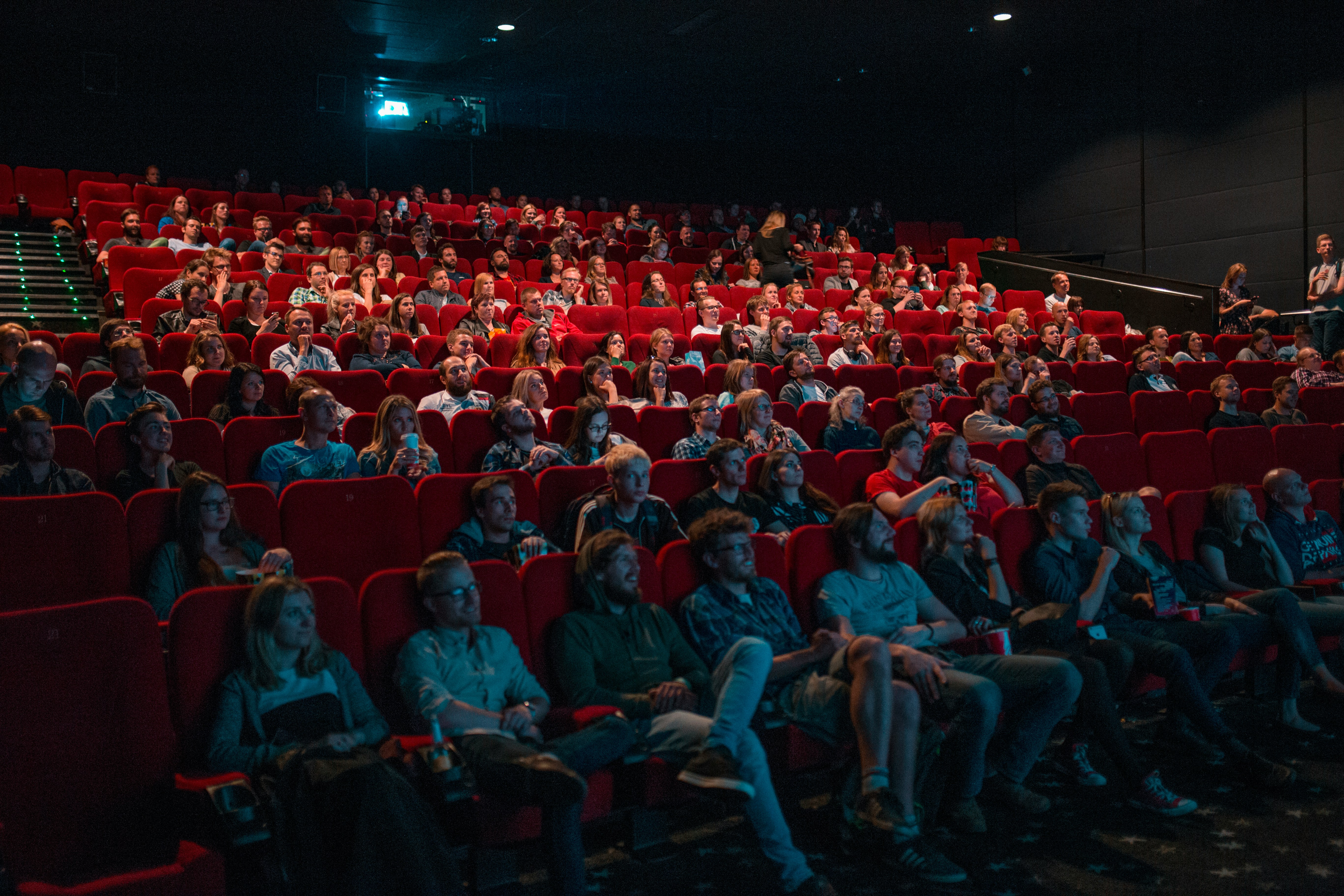
Cinema audience
Funding Watch
The Funding Map: Where MENA Filmmakers Are Getting Supported in 2026
May 2026
5 min read
+

Every year, the landscape of funding available to MENA filmmakers shifts — funds open and close, eligibility criteria change, priorities evolve with political and cultural winds. For filmmakers without institutional support or an agent navigating the system on their behalf, staying current is a full-time job on top of an already demanding creative practice.

What follows is not a comprehensive database — that will come with future iterations of this platform. It is a map of the current terrain, drawn from direct engagement with the ecosystem.

The most significant development of recent years has been the growth of Gulf-based funds. The Red Sea Fund, the Abu Dhabi Film Commission, and the Qatar Film Fund have collectively transformed the financing landscape for regional production. These funds are not without their own logics and limitations — they tend to favour certain genres, certain scales, certain kinds of storytelling — but their presence has created real opportunities that did not exist a decade ago.

European co-production funds remain essential for filmmakers whose work is oriented toward the international festival circuit. The Hubert Bals Fund, the IDFA Bertha Fund, and various national film funds across France, Germany, and the Netherlands continue to support MENA projects, though competition is significant and the terms of co-production relationships require careful navigation.

What is conspicuously absent from the current landscape is sustained support for the space between production and distribution — the period during which a finished film needs to be positioned, submitted, and circulated. This is the gap that most damages careers in practice, and it is the gap that CinéMena is most interested in addressing.

The first step is simply making the map visible. Future editions of this column will track specific deadlines, eligibility criteria, and — crucially — honest assessments of what the funding relationships actually require.

Filmmaker behind camera
Career Journeys
Between Projects: The Career Decisions Nobody Talks About
May 2026
7 min read
+

The film industry is very good at celebrating the moments. The premiere. The award. The sale. The announcement of the next project. What it is not good at is the space between those moments — the months, sometimes years, during which a filmmaker is doing the difficult, invisible work of figuring out what comes next.

I have had many conversations with filmmakers at exactly this juncture. A first feature has done well on the festival circuit. There is interest, but no confirmed next project. The filmmaker is being approached for commercial work, residencies, teaching positions — all legitimate, some genuinely useful, but none of them quite the thing. And underneath all of it, a quiet but persistent anxiety: am I still a filmmaker if I am not making a film?

The honest answer is yes — but the infrastructure of the industry is not designed to support that answer. Funding is project-based. Recognition is tied to finished work. The conversations that matter in terms of positioning and reputation tend to happen at festivals, which means they happen on a cycle that does not map onto the actual rhythm of a creative career.

What I have observed, working with filmmakers across the region, is that the decisions made between projects are often more consequential than the decisions made during production. Which relationships to maintain. Which opportunities to decline. How to talk about work that is not yet finished. How to position a career that does not yet have a clear next chapter.

These are not questions that labs and funds typically address. They are not the subject of masterclasses or festival panels. They exist in the space that CinéMena was built to inhabit — the time between moments, where the actual shape of a career is determined.

Abstract wave
Opinion Essays
AI in the Archive: A Threat or a Tool for MENA Film Heritage?
April 2026
9 min read
+

The conversation about AI and cinema has so far been dominated by two anxieties: the replacement of creative workers, and the generation of synthetic media that is difficult to distinguish from authentic footage. Both are legitimate concerns. Neither is the most pressing issue for the preservation of MENA film heritage.

The more immediate question is what happens when AI-driven tools are applied to the organisation, classification, and surfacing of existing film archives — and whether those tools serve or undermine the integrity of the material they process.

Automated tagging systems, already widely used by streaming platforms and digital archives, classify films according to genre, mood, theme, and visual content. When these systems are trained predominantly on Western film catalogues — which they are — they apply categories that may be structurally inappropriate to films from other cultural contexts. An Egyptian melodrama from the 1960s processed through a system trained on Hollywood genre conventions will be tagged inaccurately, surfaced in the wrong contexts, and effectively made less accessible to the audiences most likely to find it meaningful.

This is not a hypothetical problem. It is already happening. And as AI tools become more deeply embedded in archival workflows — not just tagging but summarisation, restoration, and eventually reconstruction — the stakes increase considerably.

The most troubling prospect is the use of generative AI to fill gaps in damaged or incomplete archival footage. The technical capability to reconstruct missing frames, restore degraded audio, or extrapolate lost sequences is developing rapidly. In the context of MENA film heritage — where gaps in the archive are often the direct result of political suppression, colonial extraction, or deliberate destruction — the question of who authorises such reconstruction, and on what basis, is not merely technical. It is ethical and political in the deepest sense.

None of this means that AI has no place in the preservation of regional cinema. Automated transcription can make films more accessible. Machine learning can identify connections across large catalogues that human researchers would miss. The question is not whether to use these tools but how — and crucially, who gets to decide.

That decision should involve the communities whose heritage is at stake. It should involve researchers with deep knowledge of regional film history. It should involve archivists who understand the specific conditions under which this material was created and lost. It should not be made by platform engineers optimising for engagement metrics.

Join CinéMena

Membership tiers

Coming Soon

Something worth
waiting for.

CinéMena membership is being shaped carefully — built around real professional needs, not platform logic. Be the first to know when it launches.

Making film
trajectories legible.

Dubai, United Arab Emirates · nour@cine-mena.com · @cine.mena

Read the Journal ↗